Every adaptive reuse project starts with a lie: that the existing building is a known quantity. It isn’t. The columns are off by half an inch. The rebar is lapped into cages so dense you can’t drill through them. The asbestos is bonded to the parapet walls. The elevator shafts need four different dispositions. And the floor plate that worked for a 1960s hotel has to become 14 apartments per floor — built around columns you can’t move.
ANDRES has done this 18 times across $950M in completed adaptive reuse projects. Not because we went looking for the hardest buildings in Texas. Because the developers who own these buildings kept calling us back.
This is the work that defines ANDRES. Team continuity, trade partner relationships, institutional knowledge — all of it compounds here in ways that don’t translate from new construction. Not even close.
18
Adaptive Reuse Projects
$950M
Completed Conversions
2,956
Units & Keys Delivered
In new construction, you set the grid. In adaptive reuse, you inherit it — and every variance compounds.
A half-inch column offset cascades through the dimensional string: past the framing, past the drywall, past the bathroom wall, all the way to the corridor. You can only frame to the worst tolerance point. There is no resetting the baseline.
The only way to manage that cascade is experience. Specific experience with these exact conditions, accumulated across multiple projects by the same people.
Carlos Trevino has been doing adaptive reuse at ANDRES for 15 years. He walked the National building before construction started, inventorying historical items for the National Park Service. He ran Mosaic. He’s running Cabana now. His next project — Magnolia — is with the same owner, because Sycamore Group doesn’t want to explain their building to a new PM.
Greg Manao — over 20 years of this work at ANDRES. Jonathan Haywood was PM on the environmental remediation at Cabana and was there when Carlos was an intern at Mosaic in 2007. Brian Wileman ran The National — 52 stories, one freight elevator, 500 workers, all during COVID — and is still here. Still building.
Employee ownership since 2017 is the mechanism that keeps these people together. What they’ve accumulated together is the capability that keeps developers coming back.
Adaptive reuse demands trade partners who understand that the plan will be wrong — and who know how to solve it without stopping the job.
Southside Environmental has worked with ANDRES for over 20 years. When the asbestos abatement at Cabana pulled the parapet walls down with it, they didn’t file a change order and wait. They bagged, tagged, and disposed of the asbestos with the block — because they held both the demolition contract and the environmental remediation contract. One firm, two scopes, zero delay.
That kind of integration doesn’t happen on a first project together. It happens on a tenth.
Texas has more obsolete commercial buildings than available land in its urban cores. Office vacancy in Dallas-Fort Worth is at historic highs. Federal and state historic tax credits remain the most powerful financing mechanism for repositioning these structures. And cities are incentivizing reuse through Tax Increment Financing — reinvesting district tax surpluses to convert abandoned buildings into occupied, taxable assets.
But here’s the gap.
Financing adaptive reuse and building adaptive reuse are fundamentally different skills. The financing requires tax attorneys and patient capital. The building requires a team that has worked inside enough existing structures to know what the drawings won’t tell you.
There are exactly zero contractors in Texas who have completed 18 adaptive reuse projects. That depth didn’t happen by accident. It happened because the developers who own these buildings — Trammell Crow, Alamo Manhattan, Sycamore Group, Hamilton Properties — kept choosing the same contractor.
Portfolio
Cathedral Guadalupe
Dallas, TX
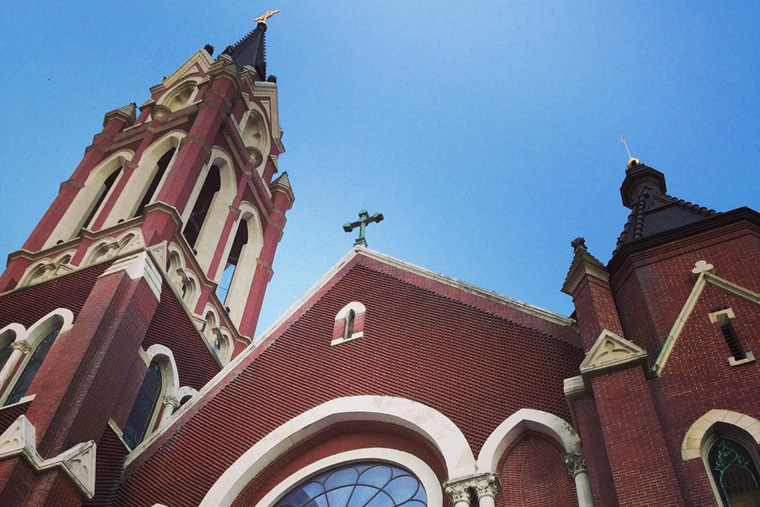
National Shrine of Our Lady of Guadalupe. The most sensitive adaptive reuse project in Texas — a landmark with irreversible cultural and architectural significance. $100M in historic tax credits. Six major preservation awards. Every decision required coordination with the Diocese of Dallas, the National Park Service, and the Texas Historical Commission. Gil Andres flew to Italy to hand-select the Carrara marble. Thirteen thousand worshippers came through every week while we built around them. No margin for error. The building is irreplaceable.
The National
Dallas, TX
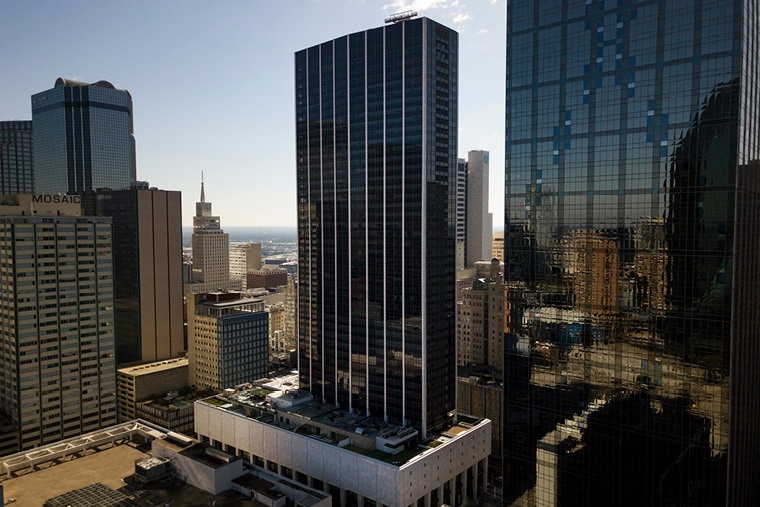
52 stories. $460M. The largest adaptive reuse in Dallas history. One million square feet converted to residential through a single freight elevator — 80,000 sheets of sheetrock, 500 workers at 10 per floor, staggered shifts so no one fought for the lift. Workers brought lunch and stayed on their floor for full 10-12 hour shifts. Three ownership groups — each one inherited us because nobody else could pick up where the last team left off. Then COVID hit. Still delivered.
Cabana
Dallas, TX (Design District)
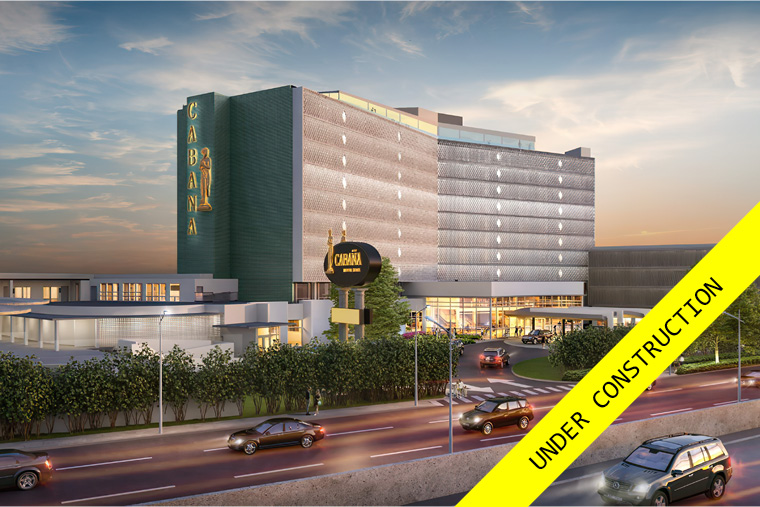
Former hotel converted to residential apartments. 10 stories, 300 hotel rooms becoming apartments within a load-bearing column grid that dictated every unit plan. The problem is what you find when you open a wall. Pool deck structural failure revealed rebar cages so dense they were effectively solid steel — not on any drawing. Back-of-house kitchen areas converted to 2-story apartments requiring surgical brick removal, palletization, and load-bearing metal stud from basement to roof. The Beatles, Lynyrd Skynyrd, and Led Zeppelin all played here. Now it’s apartments built around columns you can’t move.
Mosaic
Dallas, TX
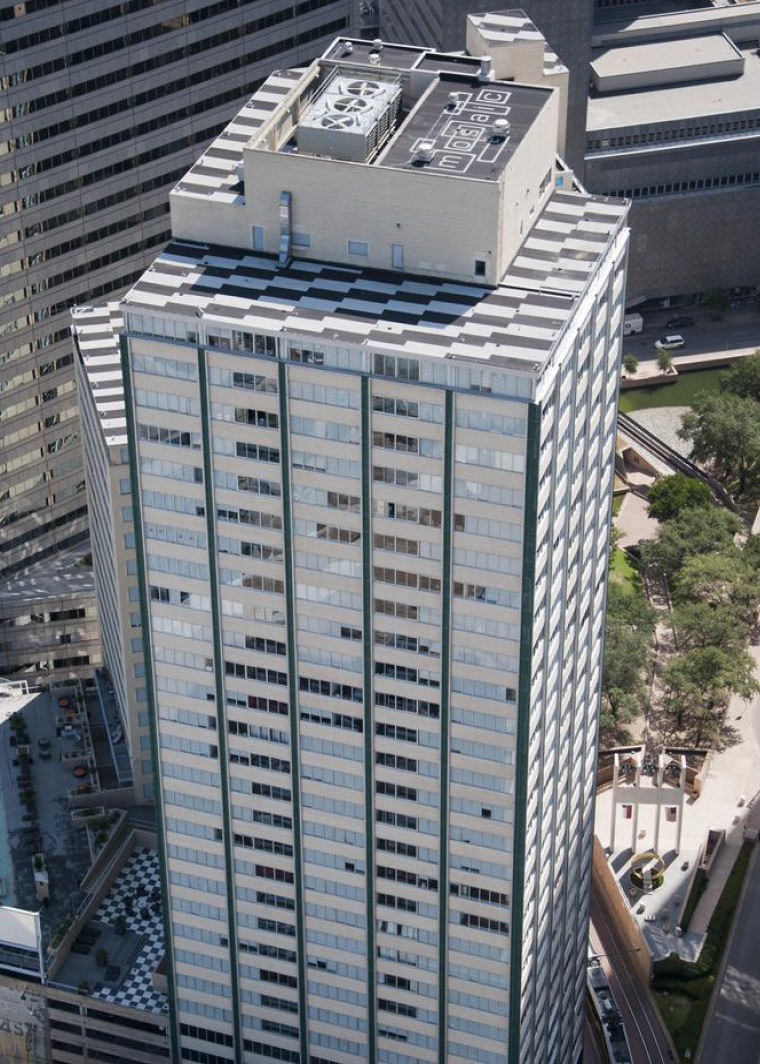
The Fidelity Union Life Building. Named for the thousands of green tiles lining its facade. 440 apartments. Listed on the National Register of Historic Places in 2009. Carlos Trevino’s first adaptive reuse with ANDRES — as an intern in 2007.
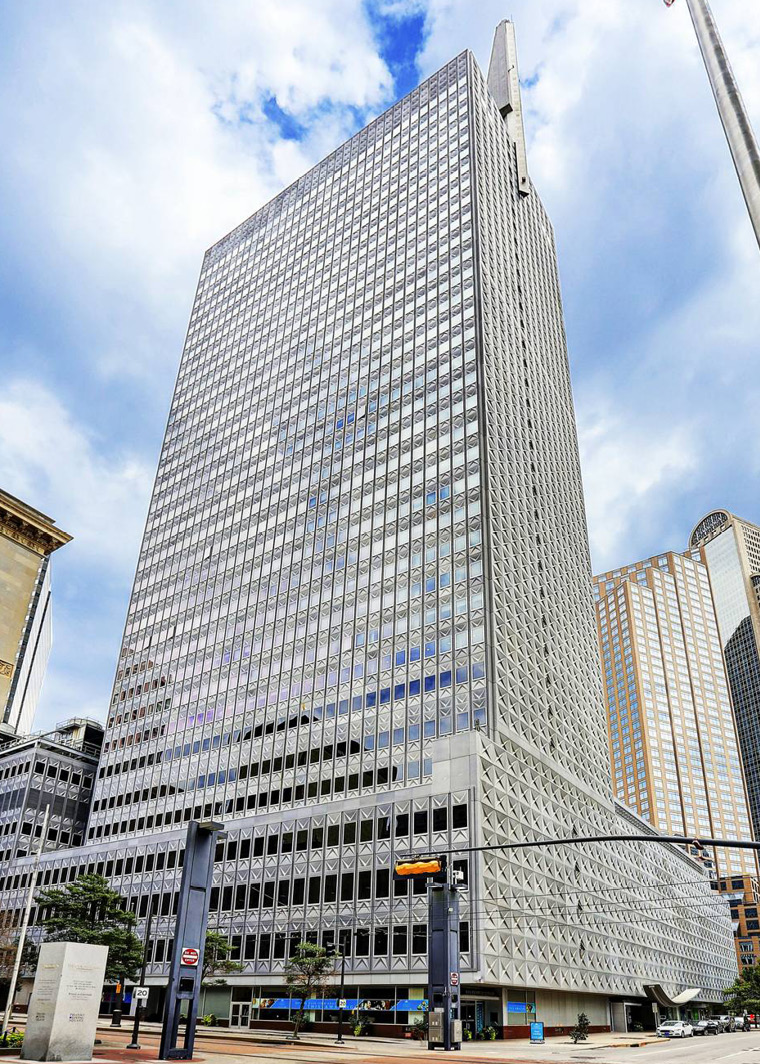
Gables Republic Tower
Dallas, TX
Originally built in 1954. Renovated into luxury apartments. National Association of Home Builders Pillar of the Industry Award for Best Adaptive Reuse (2008). AGC North Texas Summit Award for Interior Construction (2008). Preservation Dallas Achievement Award (2007).
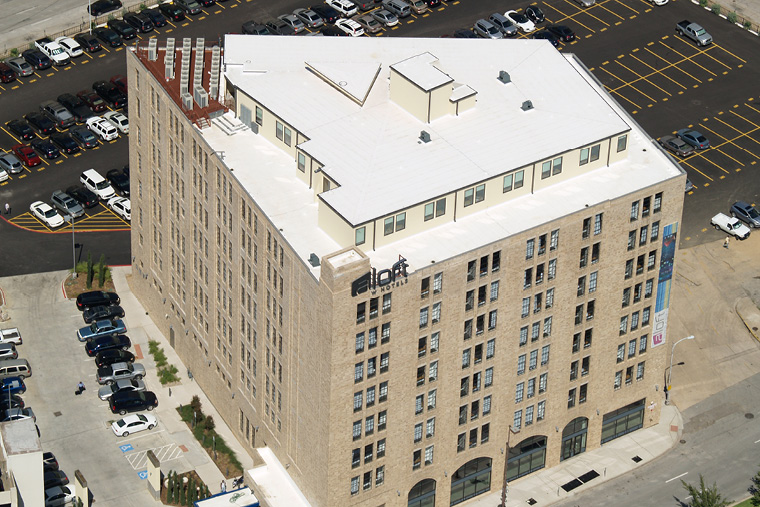
Aloft Hotel (Santa Fe Building)
Dallas, TX
Former government document depository with 12-14 inch thick slabs — built to hold massive file weight. Underground railway system. Converted to 193 hotel rooms for Starwood’s first Dallas Aloft. Columns had sagged from decades of load, requiring Gyp-Crete leveling across interior slabs — an approach normally reserved for wood frame, applied here to concrete structure using robotic total stations.
Corrigan Tower
Dallas, TX
18-story mid-century modern high-rise adapted into 150 apartments and ground-level retail. Originally built in 1952 by Leo Corrigan for $5 million. Cost over $100 million to renovate.
Dallas Power & Light Buildings
Dallas, TX
Three Art Deco buildings built in 1931, converted into 200 apartments, parking garage, and retail space. The building lit the downtown skyline from 1931 to 1975.
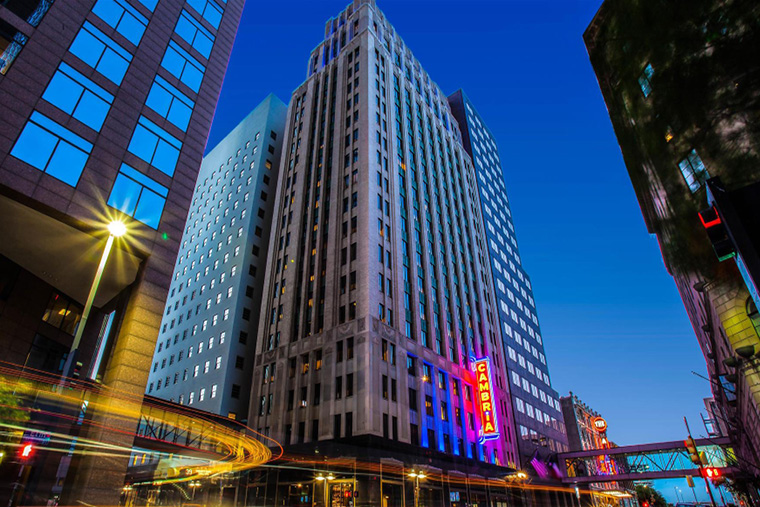
Cambria Hotel Downtown Houston
Houston, TX
Tower Petroleum Building, 23 stories, 1931 Art Deco. Converted to hotel.
People Also Ask
How is adaptive reuse construction different from renovation?
Different animal entirely. Renovation updates a building within its existing use — new finishes, upgraded systems, same purpose. Adaptive reuse changes the building’s fundamental reason for existing. A hotel becomes apartments. An office becomes residential. A government depository becomes a hotel. That change triggers new code compliance, new structural analysis, new MEP systems, and often historic preservation requirements that constrain every decision you make. You’re not refreshing finishes. You’re rebuilding what the building is.
What makes adaptive reuse projects so complex?
The building itself is the variable. In new construction, you set the structural grid, the floor-to-floor heights, the column spacing. In adaptive reuse, you inherit all of it — and every variance compounds. A half-inch column offset cascades through framing, drywall, bathrooms, and corridors. Corroded rebar, hidden asbestos, structural sag from decades of load — none of it appears on drawings. It appears when you open a wall.
How does ANDRES manage historic tax credit compliance?
Historic tax credits require coordination with the National Park Service and the Texas Historical Commission. Every material choice, every demolition sequence, every restoration decision must be documented and approved. On Cathedral Guadalupe, that process generated $100M in historic tax credits. On Mosaic, it led to National Register listing. Our team has run this regulatory process across 18 projects — it’s embedded in how we build these jobs, not layered on top.
What is TIF funding and how does it apply to adaptive reuse?
Tax Increment Financing captures the tax surplus from a defined district and reinvests it to incentivize development of underutilized buildings. The city calculates the difference between tax revenue from an occupied, converted building versus an abandoned, unpaying one. In dense downtown districts with high per-square-foot tax value, that math creates real development incentives. Several ANDRES projects — including Cabana in the Design District — have been funded through TIF mechanisms.
How long does an adaptive reuse project typically take?
Depends on the building. A 10-story hotel-to-residential conversion like Cabana runs roughly 18-24 months of construction. A 52-story project like The National spans years. But the critical variable isn’t the construction timeline — it’s the preconstruction investigation. The more thoroughly you understand existing conditions before breaking ground, the fewer schedule-breaking surprises you hit during construction.
Can any general contractor do adaptive reuse?
Any general contractor can bid one. Very few can actually manage it. Adaptive reuse requires a team that has solved these specific problems before — column tolerance cascades, unforeseen environmental conditions, structural failures hidden behind finished surfaces, historic preservation constraints that limit your options at every turn. That experience doesn’t transfer from new construction. It only comes from doing the work, repeatedly, with the same people.
Your building has a history. We know how to build its future.
Every adaptive reuse project begins with a conversation about the building — what it was, what it can become, and what’s hiding inside its walls. We’ve had that conversation 18 times. Let’s have it about yours.